


India Reaffirms unchanged Taiwan Policy
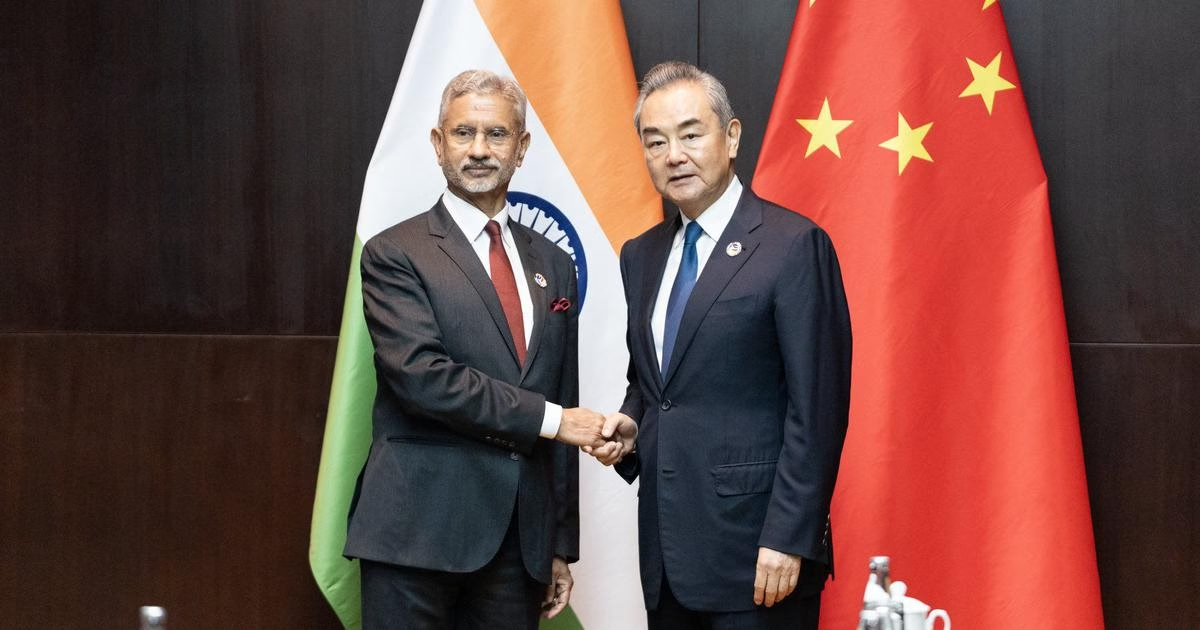
In a high-stakes diplomatic exchange on August 18, External Affairs Minister S. Jaishankar met with China’s Foreign Minister Wang Yi in Delhi—against a backdrop of fragile ties strained since the 2020 Galwan Valley clash. While dialogue touched on border de-escalation and pilgrimages, one flashpoint emerged: Beijing’s claim that Jaishankar stated, “Taiwan is part of China.” New Delhi responded sharply.
India Sets the Record Straight

Government officials swiftly clarified that there has been “no change in India’s position” regarding Taiwan, emphasizing that its engagement continues to be limited to economic, technological, and cultural cooperation—“like the rest of the world.” The Indian side noted that China also collaborates with Taiwan in similar domains.
Glad to meet Foreign Minister Wang Yi. Since my meeting with President Xi in Kazan last year, India-China relations have made steady progress guided by respect for each other's interests and sensitivities. I look forward to our next meeting in Tianjin on the sidelines of the SCO… pic.twitter.com/FyQI6GqYKC
— Narendra Modi (@narendramodi) August 19, 2025
Diplomatic Pushback
Indian officials privately labeled Beijing’s readout as a mischaracterization: while China urged India “not to deal with Taiwan,” Jaishankar reportedly responded by pointing out the inherent inconsistency—China, too, engages with Taiwan in these sectors.
Border Talks and Diplomatic Momentum
Beyond Taiwan, the meeting served broader strategic goals. Jaishankar and Wang Yi reaffirmed their commitment to de-escalation and peace along the Himalayan border. Simultaneously, discussions advanced plans for an “early harvest” agreement on boundary delimitation and the formation of a dedicated expert group.
Geopolitical Undercurrents
This episode underscores India’s nuanced posture in the Asia-Pacific: while adhering unofficially to the One-China policy, India maintains robust, unofficial ties with Taiwan—enhanced over recent decades in areas like trade, technology, and people-to-people outreach. Importantly, India has not reiterated the One-China principle in joint communiqués since 2010, a deliberate diplomatic choice following tensions over stapled visas to Indian citizens in Jammu & Kashmir and Arunachal Pradesh.
With the Shanghai Cooperation Organisation (SCO) summit in Tianjin approaching on August 31, Prime Minister Modi’s upcoming visit to China is expected to build on this cautious thaw—balancing strategic ambiguity with pragmatic engagement.
China’s Aggression Toward Taiwan: A High-Stakes Showdown
Author’s View: Fragile Trust and Strategic Leverage
While the official statements convey stability and cooperation, the history of India-China relations is complex and fragile, built on decades of mistrust. The Communist Party of China has long used geopolitical maneuvers and aggressive tactics to further its political objectives, and its campaign for a “unified China” has always placed Taiwan at the center of its strategy.
For India, normalization with Beijing remains a challenging path clouded by mistrust and lack of confidence. Though trade continues and diplomacy is free of visible friction, the absence of trust limits the growth of any meaningful partnership.
This latest episode may reflect India’s strategy of carefully leveraging between Chinese interests and U.S. interests over Taiwan—not as a mediator, but as a sovereign actor pursuing what is good for India. Only time will tell whether such statements will carry weight globally, but one thing is clear: the Chinese Communist Party urgently seeks international validation for its Taiwan campaign, and this very desperation could offer India a strategic advantage.
#ChinaIndiaTaiwan #DiplomaticBalance #Geopolitics #StrategicClarity #BorderTalks
Discover more from News 24 Media
Subscribe to get the latest posts sent to your email.